
Rebuilding Trust After Infidelity: Can a Relationship Survive Cheating?
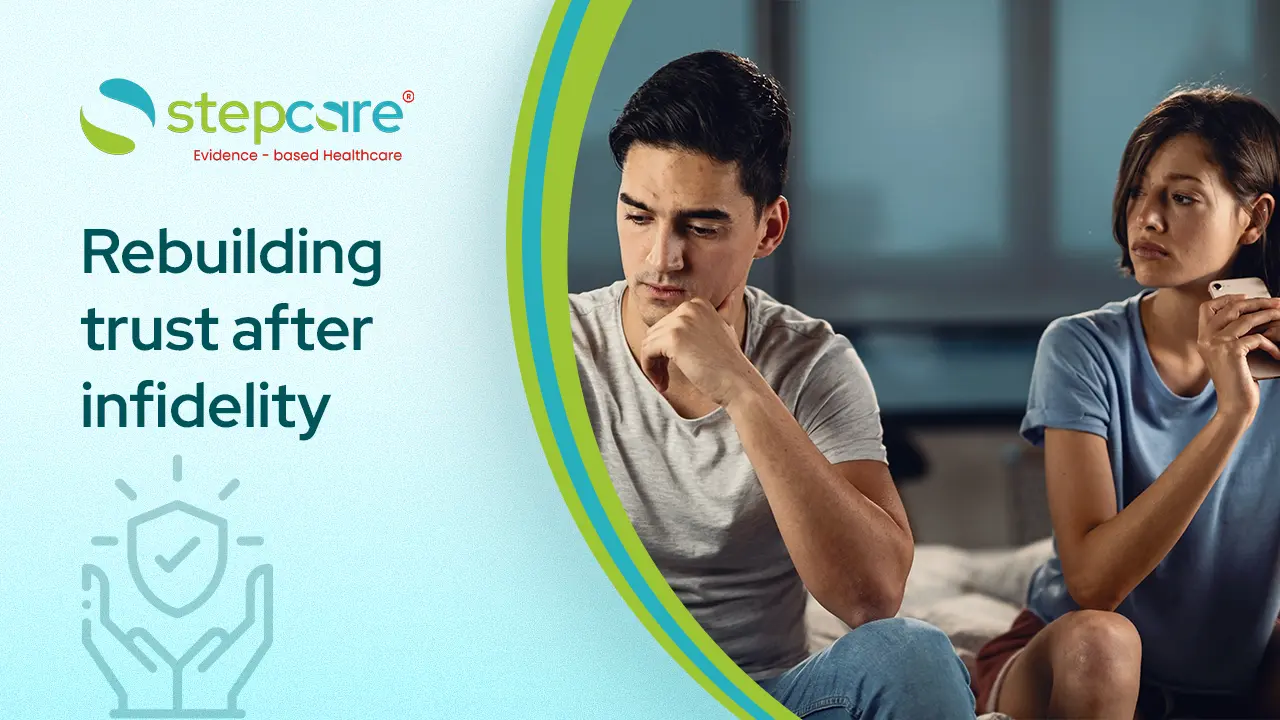
The discovery of an affair is one of the most destabilising experiences a person can go through in a relationship. In the immediate aftermath, it can feel like the entire foundation of what you built together has been removed. The questions come in waves: What was real? Can I trust anything? Is this fixable? Should it be?
The short answer to whether a relationship can survive infidelity is: yes, some relationships do, and when both partners do the necessary work, they can sometimes emerge with a connection that is deeper and more honest than what existed before. But that is not a guarantee. Not every relationship should survive infidelity, and staying together is not automatically the right choice or a sign of strength.
What this guide offers is a clear, evidence-based picture of how healing after infidelity actually works, what factors predict whether a relationship can recover, and what the process looks like for both the person who was betrayed and the person who caused the harm.
Can a Relationship Actually Survive Infidelity?
Research and clinical experience both support that yes, some relationships not only survive but genuinely recover from infidelity. A randomised controlled trial examining the Gottman Method Couples Therapy with couples following discovery of an affair found that the Gottman approach was significantly more effective than standard treatment in facilitating affair recovery, particularly in rebuilding trust, improving conflict management, and restoring relationship satisfaction.
But the key qualifier is that both partners have to genuinely want to do the work. And "the work" is substantial. It is not just forgiving and moving on. It is a real, structured process of accountability, grief, understanding, and rebuilding that typically takes 1 to 3 years even when everything goes relatively well.
Relationship researcher and therapist Esther Perel argues that affairs are rarely just about sex or even about the affair partner. They often carry messages about the person who had the affair's unmet needs, unexplored parts of themselves, or fears about their own life. Understanding what the affair meant, not excusing it, is part of the work of healing.
What Makes Rebuilding Trust After an Affair So Hard
Trust is not a switch that can be flipped back on. It is rebuilt through consistent, repeated experience over time. After infidelity, several things make that rebuilding process particularly painful:
- Betrayal trauma: Being cheated on by a person you trusted does not just hurt emotionally. It can produce trauma-like symptoms including intrusive thoughts about the affair, hypervigilance about the betraying partner's whereabouts, sleep disruption, appetite changes, difficulty concentrating, and sudden emotional flooding. These are recognised responses to a profound rupture in safety.
- Loss of narrative certainty: After an affair is discovered, the person who was betrayed often needs to re-examine large portions of their shared history. Was anything real? Were they imagining things? What else was hidden? This loss of a coherent story about their own life is deeply disorienting.
- The ongoing presence of the betraying partner: Unlike the end of a relationship, rebuilding within it means continuing to live alongside the person who caused the harm, often while still processing the acute pain of what happened. This is very different from grieving a relationship that has ended.
- Asymmetrical work: The person who was betrayed is carrying the pain of violation while also being asked to eventually consider rebuilding. The person who cheated is carrying guilt and shame while also being asked to be transparent, patient, and consistently accountable. These are both significant, and they are different in ways that couples therapy helps navigate.
How Long Does It Take to Rebuild Trust After Cheating?
This is one of the most common questions, and the honest answer is that it depends on several variables:
- Whether the affair has fully ended and the cheating partner has cut contact with the affair partner
- Whether the cheating partner is genuinely transparent, remorseful, and accountable rather than defensive or minimising
- The quality of the therapeutic support both partners are receiving
- Pre-existing relationship issues that may have contributed to the context in which the affair occurred
- The nature of the affair itself (emotional, physical, or both; brief or long-term; discovered or confessed)
Most couples therapists who specialise in infidelity describe a recovery timeline of 1 to 3 years for meaningful, stable trust to be rebuilt. Some relationships recover in less time. Some take longer. Some do not recover, and that is also a valid outcome.
Steps to Rebuild Trust After Infidelity: The Gottman Framework
The Gottman Institute's framework for affair recovery involves three core stages: Atone, Attune, and Attach.
Stage 1: Atonement
This stage belongs primarily to the partner who had the affair. It involves:
- A full, honest account of what happened (without graphic details that cause unnecessary harm)
- Taking genuine, non-defensive responsibility without blame-shifting
- Ending the affair completely and transparently (blocking contact, sharing evidence if requested)
- Demonstrating remorse through consistent actions over time, not just in words
- Tolerating the betrayed partner's emotional responses, including anger and grief, without becoming defensive or withdrawing
This stage is difficult because the guilt and shame carried by the cheating partner can make sustained accountability feel almost unbearable. Therapy helps the cheating partner stay present with their partner's pain rather than disappearing into their own.
Stage 2: Attunement
Once the acute crisis phase has stabilised somewhat, both partners need to understand more deeply what led to the affair and what it meant. This is not about excusing the behaviour but about building an honest picture of the relationship that includes its context. This stage involves:
- Exploring what needs were unmet in the relationship and why those needs were not expressed or addressed directly
- Understanding what the affair meant to the person who had it, without glorifying it
- Working through the ways in which the relationship dynamics may have contributed to the conditions (not caused the affair, but were part of the environment)
- Beginning to rebuild friendship and emotional connection
Shirley Glass, in her foundational clinical work "Not Just Friends," identifies the importance of rebuilding what she calls the "walls and windows" in the relationship: transparency and openness with each other, and appropriate boundaries with the outside world.
Stage 3: Attachment
This stage is about rebuilding the sense of being a couple: shared future, physical and emotional intimacy, trust in the other person's fundamental commitment. It requires:
- Gradually re-establishing physical closeness at a pace that feels safe for both partners
- Creating new shared experiences and rituals
- Developing a shared narrative about what happened and what the couple learned from it
- Making explicit and ongoing commitments about the relationship's future
Should You Stay in a Relationship After Cheating?
There is no universally correct answer to this. Some factors that genuinely support trying to rebuild:
- The cheating partner has fully ended the affair and is completely transparent
- Both partners genuinely want to remain together and are willing to do the therapeutic work
- The betrayed partner, given time and support, can envision a future in the relationship
- Both partners can engage with couples therapy and individual therapy consistently
Some factors that suggest separating may be the wiser path:
- The cheating partner is not genuinely remorseful or continues to be defensive and minimising
- The affair was part of a pattern of deception, not an isolated event
- The betrayed partner cannot envision a future in the relationship regardless of the partner's efforts
- There is a history of other forms of harm in the relationship alongside the affair
- Either partner is using the crisis to maintain control or cause further harm
Staying is not always strength, and leaving is not always failure. Both can be healthy responses depending on the situation.
How Therapy Helps After Infidelity
Individual therapy and couples therapy serve different, complementary roles in affair recovery.
- Individual therapy for the betrayed partner provides a space to process the trauma, grief, and anger without the complication of managing the cheating partner's reactions simultaneously. It helps separate what belongs to the relationship from what belongs to the individual's own healing.
- Individual therapy for the person who cheated helps them understand what drove the affair and build the capacity for transparency and accountability that the repair process requires.
- Couples therapy provides a structured, mediated space in which both partners can work through the stages of recovery with professional guidance. The Gottman Method and Emotionally Focused Therapy (EFT) are among the most evidence-supported approaches for infidelity recovery.
Book a Therapy Session at Stepcare Whitefield
Stepcare's counselling and therapy team in Whitefield offers individual and couples therapy for people working through infidelity, relationship breakdown, and trust issues. Sessions are fully confidential, available in person, and online.
Call or WhatsApp+91 9606910113 / +91 9606910114
Emailappointments@stepcare.co.in
AddressG-01, Ground Floor, Brigade IRV Center, Nallurhalli, Whitefield, Bengaluru 560066
Need care guidance?
Book a consultation with Stepcare and get professional support for your health concern.
Book Appointment