

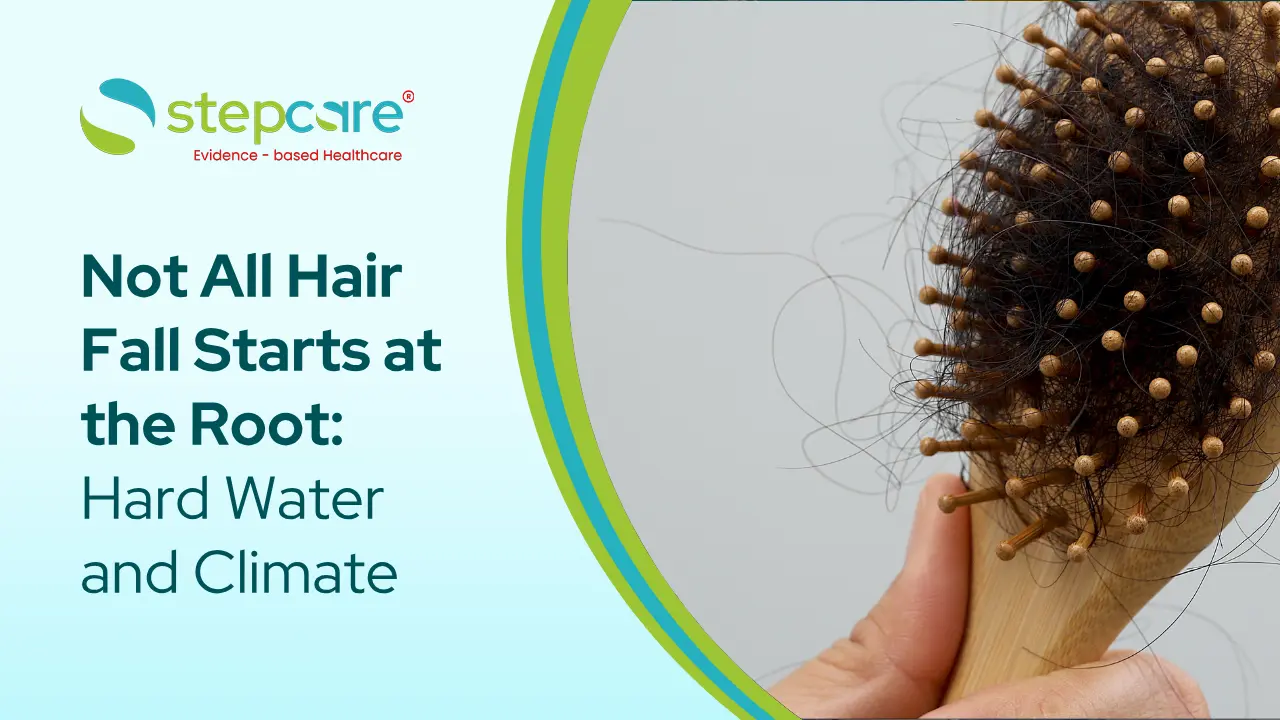
Hair Fall in Bangalore's Hard Water and Climate: Causes and When to See a Dermatologist
Almost everyone who moves to Bangalore eventually says the same thing: my hair started falling more after I shifted here. The water usually gets the blame. The reality is more complicated and, importantly, more treatable.
Here is the short answer: hard water does not cause hair to fall from the root. It damages the hair shaft, making hair dry, tangled, and prone to breakage, which looks like increased hair fall. Actual hair loss from the follicle is usually driven by nutritional deficiency, thyroid dysfunction, hormonal factors, stress, or genetic pattern hair loss, and all of those are diagnosable and treatable.
What Hard Water Actually Does to Hair
Bangalore's water supply, particularly borewell-dependent supply common in Whitefield apartments, has high dissolved mineral content, primarily calcium and magnesium.
These minerals deposit on the hair shaft and scalp. The effects:
- Mineral buildup coats the hair, making it feel rough, dry, and dull
- Shampoo lathers poorly, leading people to use more product and wash more aggressively
- Hair becomes tangled and brittle, increasing breakage during combing
- Scalp can become dry, flaky, and itchy
- Colour-treated hair fades faster
The critical distinction: breakage happens along the hair shaft. True hair fall comes out from the root, with a small white bulb attached. If you look at the hair on your brush and most strands have no bulb at the end, you are dealing with breakage, not follicular hair loss.
The Actual Causes of Hair Fall Seen in Bangalore Clinics
|
|
|
|
|
|
|
|
|
|
|
|
|
|
|
|
|
|
|
|
|
|
|
|
|
|
|
|
|
|
|
|
|
|
|
|
|
|
|
|
|
|
|
|
Telogen effluvium deserves specific mention. It is a sudden diffuse shedding that occurs 2 to 3 months after a physiological stressor: a severe illness, high fever, childbirth, crash dieting, major surgery, or intense psychological stress. Because of that delay, people often do not connect the shedding to the event that caused it. It is self-limiting and usually recovers over 6 to 9 months once the trigger is addressed.
Why Bangalore's Professional Population Is Particularly Affected
Vitamin D deficiency is close to universal among indoor office workers in India, driven by minimal sun exposure during working hours.
Vitamin B12 deficiency affects a large proportion of vegetarians, and around 47 percent of Indians overall are deficient.
Iron deficiency is extremely common in Indian women of reproductive age.
Thyroid disease affects approximately 1 in 10 Indian adults, with women affected around three times more often than men.
Chronic work stress drives cortisol elevation, which contributes to telogen effluvium.
Each of these is identifiable through a straightforward blood panel and treatable.
How Much Hair Fall Is Normal?
Losing 50 to 100 hairs a day is physiologically normal. Hair grows in cycles, and at any time around 10 to 15 percent of hair is in the shedding phase.
Concerning signs: consistently losing noticeably more than 100 hairs a day for over 3 months, a visibly widening parting, a receding hairline, visible scalp through the hair, patchy bald areas, or shedding accompanied by scalp itching, pain, or scaling.
Practical Measures for Hard Water Hair Damage
- Install a shower filter or water softener if feasible in your building
- Use a chelating or clarifying shampoo once every week or two to remove mineral buildup
- Follow with a conditioner every wash to reduce tangling and breakage
- Do a final rinse with filtered or RO water where possible
- Avoid combing wet hair, when it is most vulnerable to breakage
- Reduce heat styling frequency
- Use a wide-toothed comb rather than a fine brush
These measures address breakage. They will not resolve hair loss caused by deficiency, thyroid disease, or hormonal factors.
When to See a Dermatologist for Hair Fall
Book a consultation if: shedding has been significant for more than 3 months, you can see scalp through your hair or your parting has widened, there are defined bald patches, hair fall is accompanied by fatigue or menstrual changes, scalp is itchy, painful, or scaling, or over-the-counter products have not helped after 8 to 12 weeks.
A dermatologist will examine the scalp, often with dermoscopy, and order relevant blood tests. Treatment depends on the cause and may include correcting deficiencies, treating thyroid or hormonal issues, topical minoxidil, oral medication where indicated, PRP, or GFC therapy.
Book a Hair Fall Consultation at Stepcare Whitefield
Stepcare's dermatology team offers hair fall assessment with in-house blood testing, dermoscopy, and treatment options including PRP and GFC.
Call or WhatsApp: +91 9606910113 Email: appointments@stepcare.co.in Address: G-01, Ground Floor, Brigade IRV Center, Nallurhalli, Whitefield, Bengaluru 560066 Hours: Monday to Saturday, 8 AM to 8 PM | Sunday, 10 AM to 6 PM
Disclaimer: This content is for informational purposes only and should not be considered medical advice. Please consult a qualified healthcare professional before making any medical decisions.
Need care guidance?
Book a consultation with Stepcare and get professional support for your health concern.
Book Appointment